Bodyweight Training for Climbers: 7 Simple Exercises to Stay Strong Anywhere
Why Do Bodyweight Training if You Are a Climber?
You don't always need a fingerboard or an artificial climbing wall to improve your climbing performance. A well-structured bodyweight workout plan offers several key benefits:
Boost functional strength
Enhance joint mobility and flexibility
Reinforce your core stability
Prevent common climbing injuries to the shoulders, elbows, and fingers
This calisthenics training is ideal for the off-season, during a work trip, or on rest days when you can't climb but still want to stay active and strong.
The Exercises: Simple, Effective, and Climber-Specific
I propose a routine of 7 highly effective exercises that you can complete in 25–30 minutes, 2–3 times a week. You don't need any equipment—just a mat and some space. These are simple exercises I learned while working as an instructor in the climbing gyms across England and Wales.
💪 1. Plank + Opposite Toe Touch
Benefits: Core strength, shoulder stability, total body control
Start in a classic high plank position.
Bring one hand toward the opposite foot, aiming to touch your toes (or shin/knee).
Alternate sides, focusing on maintaining pelvic stability and avoiding rotation.
Sets: 3 sets of 12 total touches
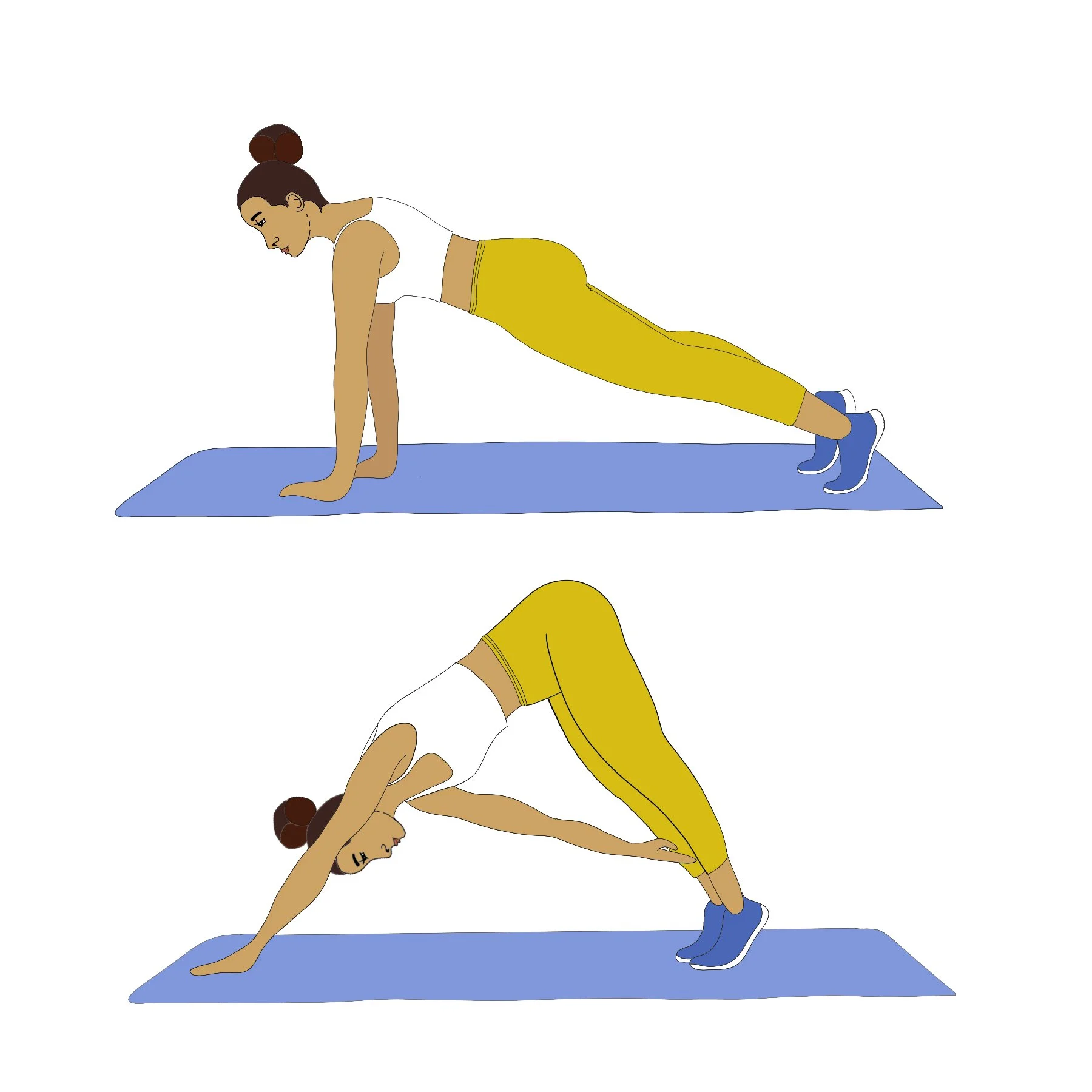
Flawless plank execution and toe tap
🧱 2. Wall Sit + Overhead Shoulder Raises
Benefits: Static leg strength, shoulder rotator cuff strengthening
Position yourself into a wall sit (sitting against the wall as if on an invisible chair) at a 90-degree angle.
With your arms straight, slowly raise and lower them overhead and slightly out to the sides (like a 'Y' raise).
Tip for Progression: For added difficulty, hold two water bottles or light weights.
Sets: 3 sets of 30 seconds wall sit + 10 reps
🌉 3. Reverse Table Top + Leg Lifts
Benefits: Shoulder endurance, scapular mobility, lower core control
Start in the Reverse Table Top position (sitting with hands behind you, feet on the ground, lifting the hips up to form a "table" shape).
While maintaining the hip elevation, lift one leg straight up, then alternate.
Focus on keeping your hips level throughout the movement.
Sets: 3 sets of 10 lifts per leg
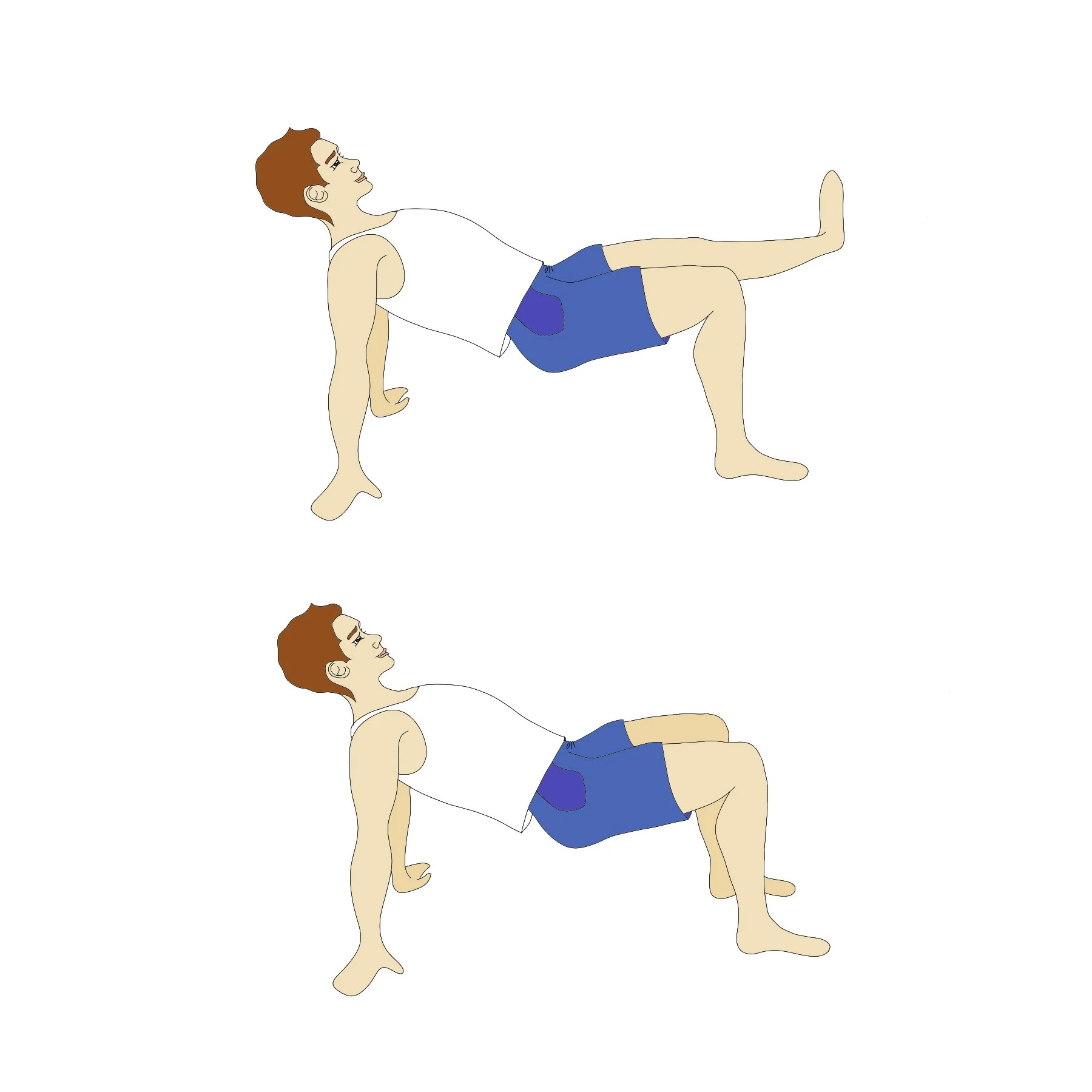
How to perform an inverted table-top with leg raises
🏹 4. Archer Push-Ups (Asymmetrical Push-Ups)
Benefits: Unilateral strength (Arms/Shoulders), lock-off simulation, core stability
Place one hand further out to the side than the other, keeping that arm straight.
Descend by bending only the active arm; the straight arm acts as a stabilizer.
The goal is to perform a push-up predominantly with one arm.
Alternate sides for the prescribed repetitions.
Sets: 3 sets of 6 reps per side
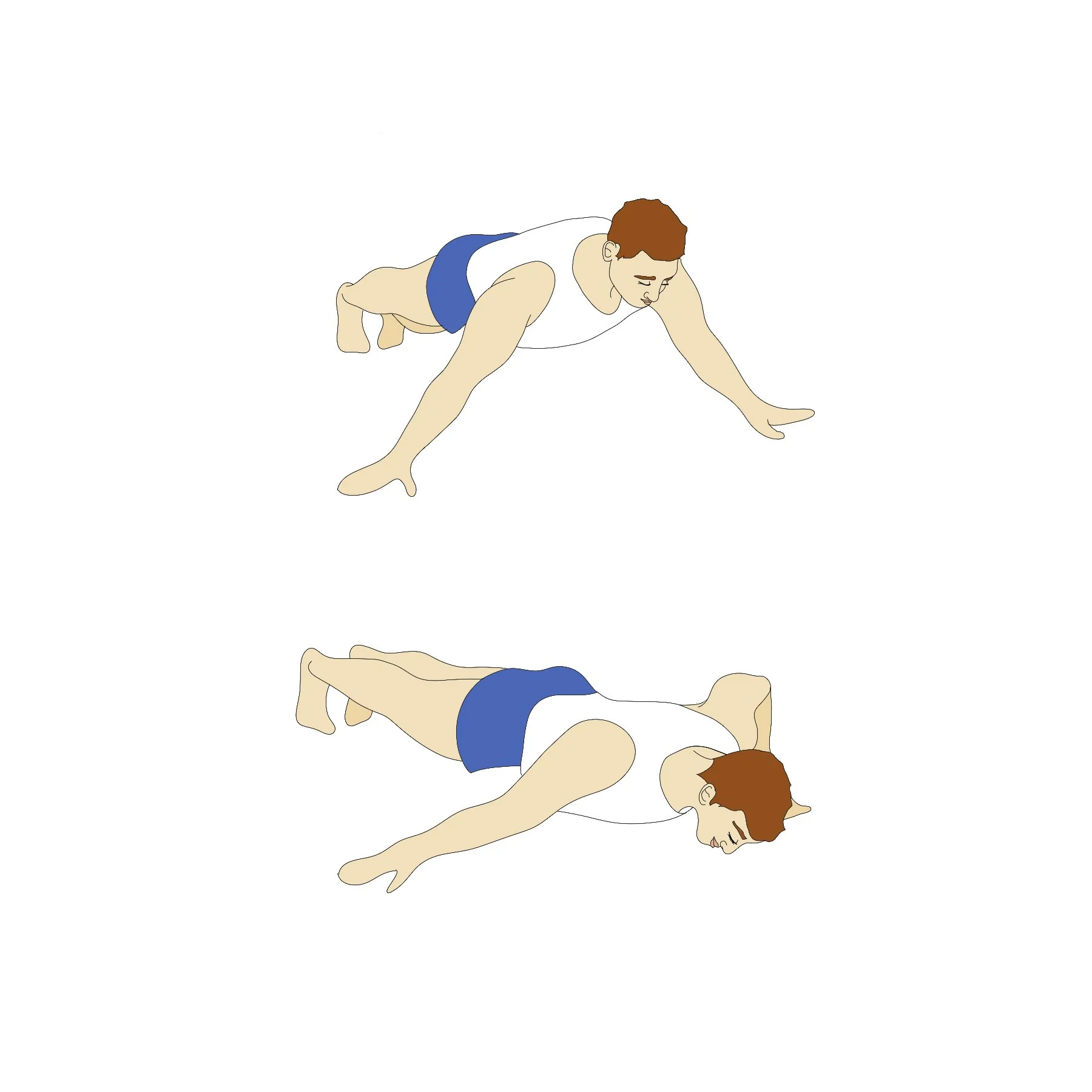
Ancora lui, con le flessioni asimmetriche
🦸5. Superman to Hollow Body Rockers Circuit
Benefits: Strengthening the posterior chain (Back/Glutes) and anterior core (abs), body tension
This is a paired circuit focusing on opposing muscle groups crucial for maintaining tension on the wall.
Phase 1: 20 seconds in "Superman" Position (Prone, arms and legs simultaneously lifted off the ground, engaging the lower back and glutes).
Phase 2: 20 seconds in "Hollow Body Rock" (Banana Position) (Supine, lower back pressed into the ground, shoulders and legs lifted, forming a slight curve).
Sets: Repeat the full 40-second circuit 3 times
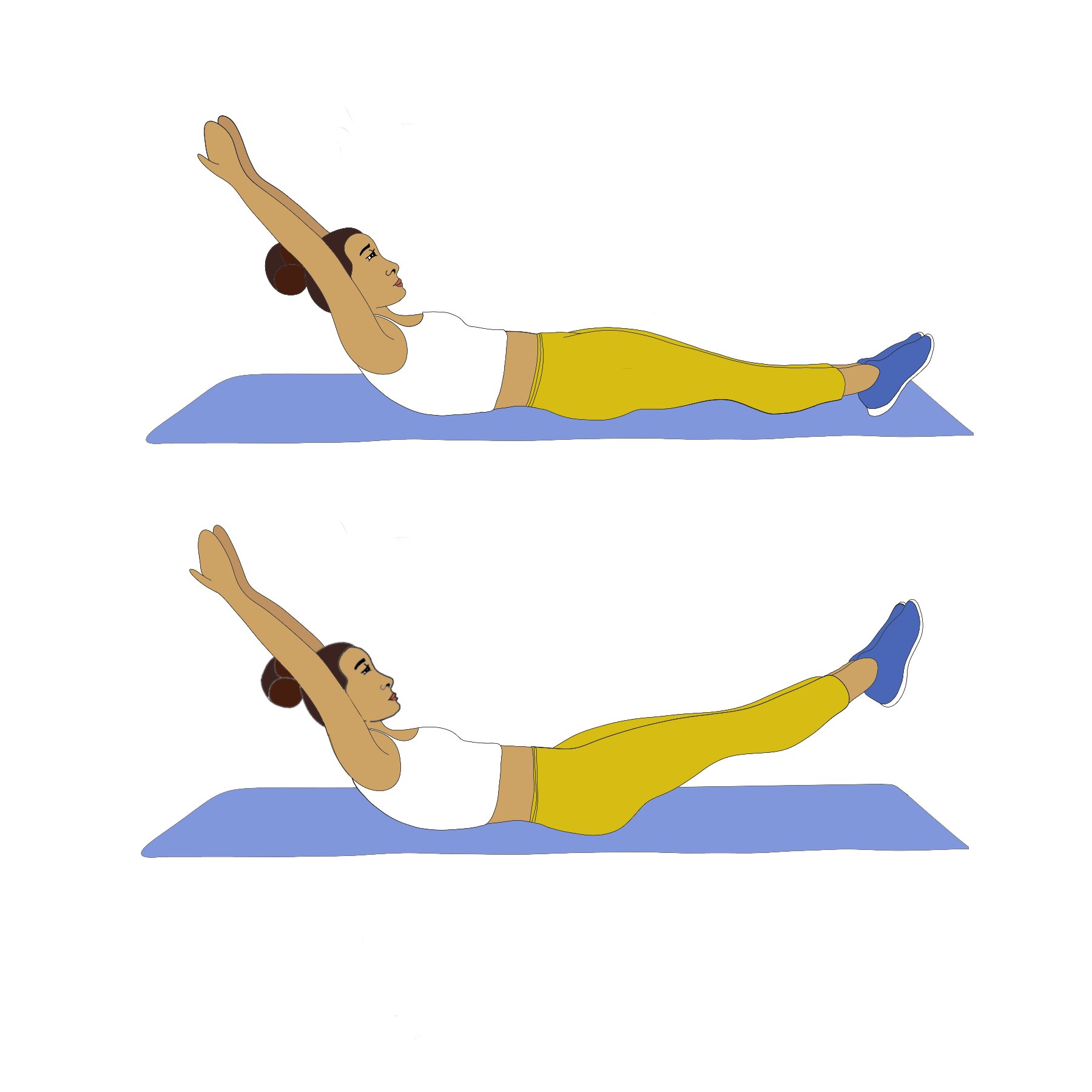
Hollow body or banana
💁🏼♀️ 6. Plank with Opposite Shoulder Tap
Benefits: Scapular stability, anti-rotational core strength, proprioception
Start in a high plank position.
Use one hand to tap the opposite shoulder.
Key Focus: Keep your body perfectly still and maintain a neutral spine, minimizing any hip or pelvic rotation (anti-rotation).
Sets: 3 sets of 20 total taps
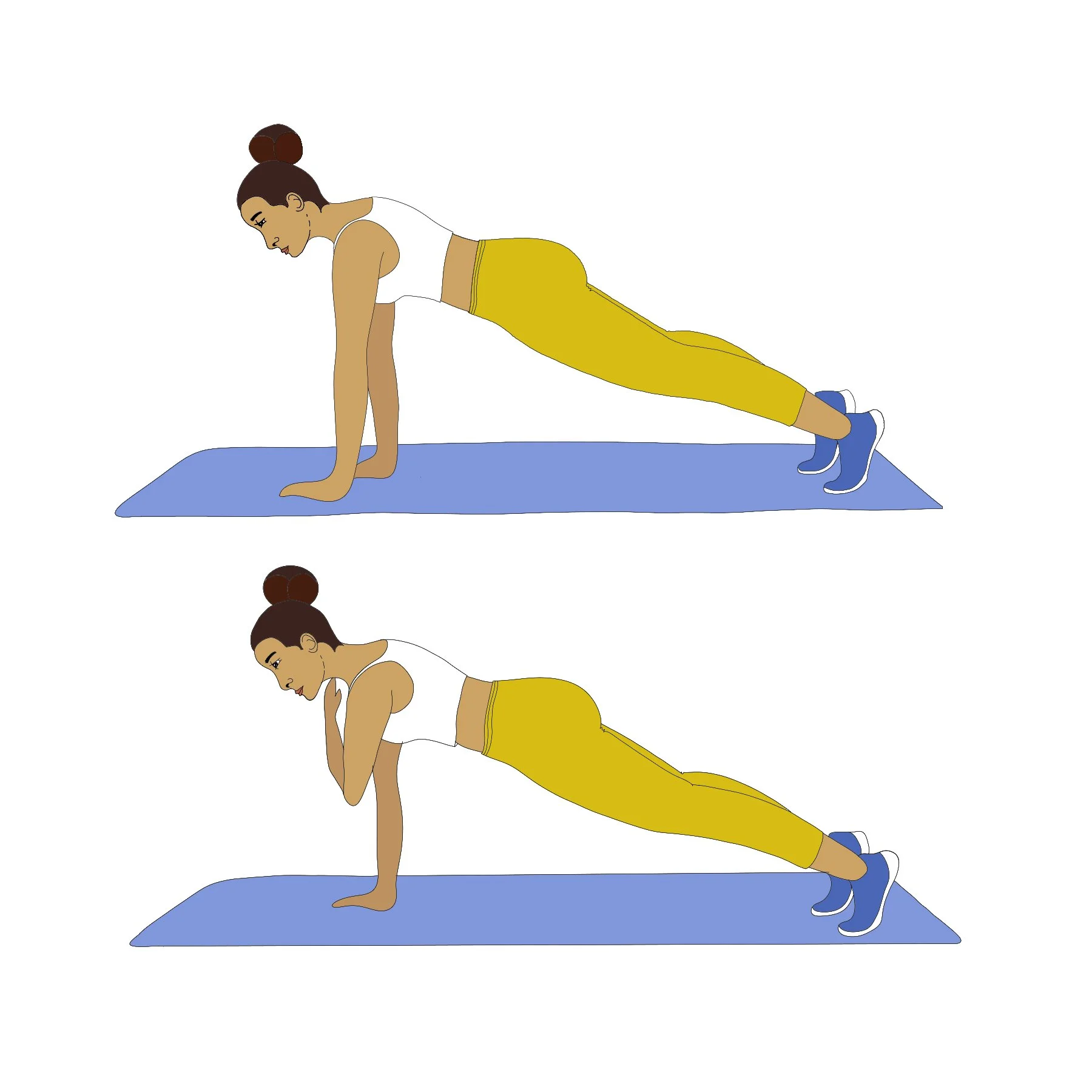
Plank with opposite shoulder tap
👼🏾 7. Wall Angels
Benefits: Shoulder mobility, thoracic spine extension, posture improvement, injury prevention
Stand with your back flat against the wall, feet slightly away.
Start with your arms in a "goalpost" or L-shape (elbows bent at 90 degrees) and press your entire back, head, and arms against the wall.
Slowly slide your arms up the wall, simulating the movement of an angel's wings, trying to keep your elbows, wrists, and the back of your hands in constant contact with the surface.
Return slowly to the starting position.
Sets: 3 sets of 10 slow reps
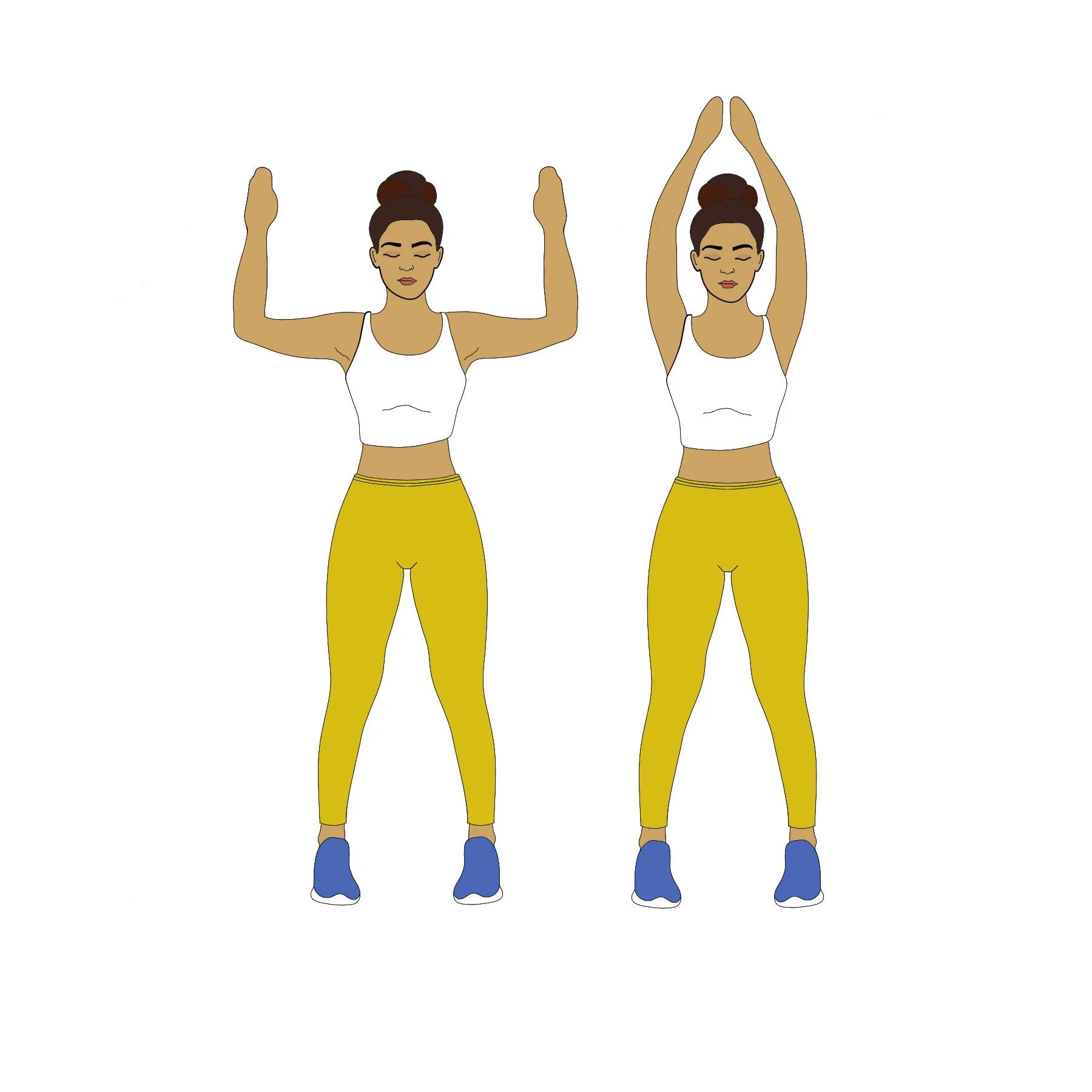
Wall Angels
Training Tips for Climbers
Follow these essential guidelines to maximize your results and minimize injury risk:
✅ Warm Up First: Spend 5–10 minutes on dynamic mobility (shoulder rotations, light squats, jumping jacks).
✅ Focus on Breathing: Exhale during the effort phase (concentric), inhale during the relaxation/return phase (eccentric).
✅ Prioritize Quality over Quantity: Concentrate on the form and control of each movement, not just hitting the numbers.
Conclusion: Stay Strong, Climb Anywhere
Bodyweight training is a simple yet powerful way to maintain and improve your climbing fitness, no matter where you are. Just a few targeted exercises are enough to reinforce the crucial areas for climbing: core strength, shoulder stability, total body control, and mobility.
Ready to elevate your performance? Incorporate these movements into your weekly routine!
👉 Have you tried these bodyweight exercises? Do you use others in your routine? Share your thoughts in the comments below!
