From Gym to Crag: What You Really Need for Sport Climbing (and What to Leave at Home)
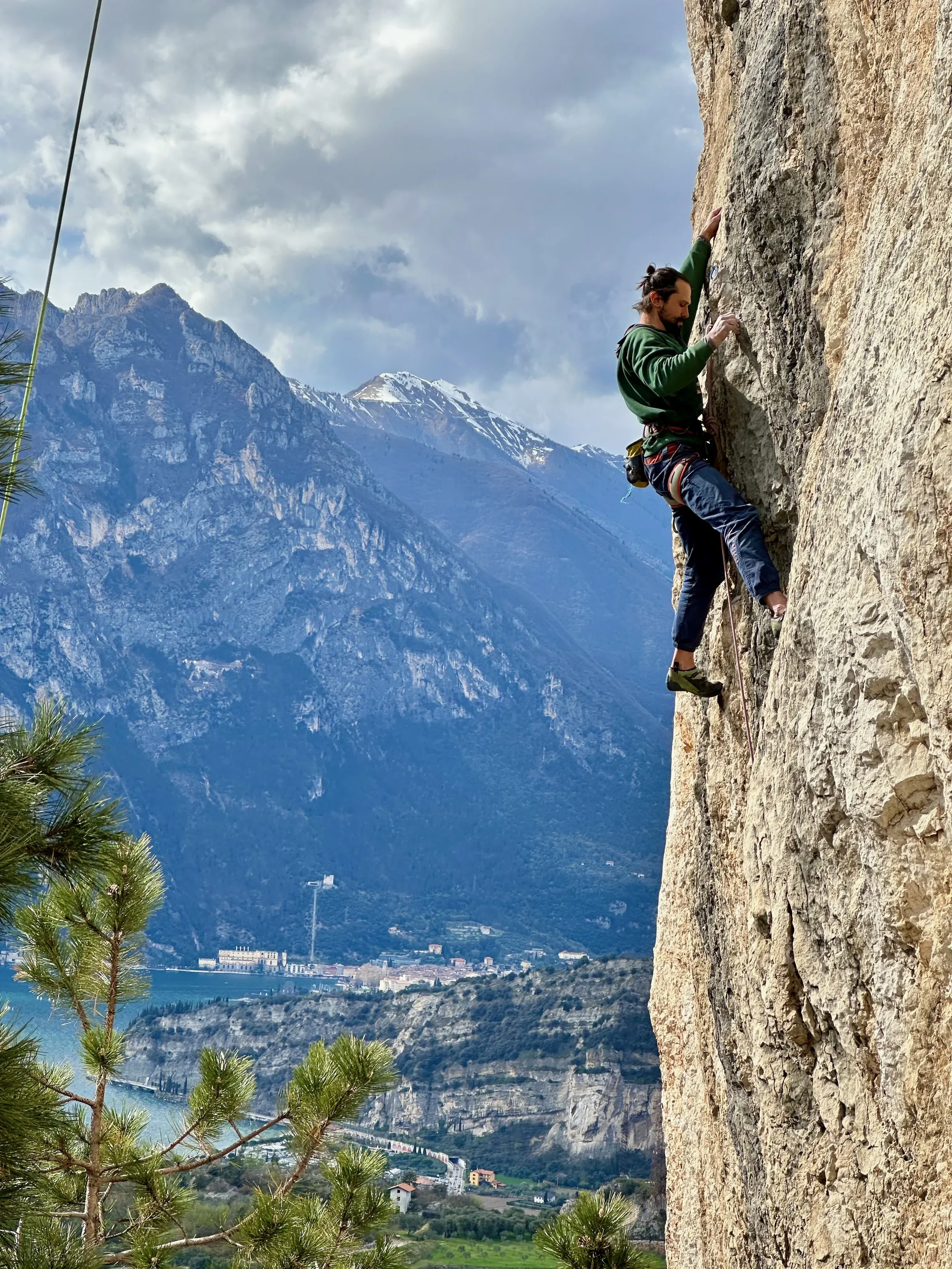
Outdoor Climbing in Nago, Trentino
Do you already climb on ropes in the gym? Rest assured, the call of outdoor climbing will eventually reach you, too. Real rock, fresh air, anchors at the top of the route…
However, the transition from indoor to outdoor climbing isn't just about grades or technique: it’s about gear, safety, and awareness.
Many beginner climbers at the crag make two opposite mistakes:
They bring too much useless gear.
They arrive without the essentials.
In this guide, you’ll find clear, practical, and honest tips: what you truly need for outdoor sport climbing, what you can leave at home, and how to make the right choices without wasting money.
Why does gear change between indoor and outdoor?
In the gym, everything is controlled: clean holds, certified anchors, ropes regularly replaced by pros, and a predictable environment. At the crag it’s different. While climbing outdoors, many factors come into play that you cannot ignore:
Rockfall risk
Friction on the rock
Actual length of the routes
Exposure to sun, humidity, and dust
Cleaning the anchors and rappelling
This is why some sport climbing gear for the crag is different (or chosen with other criteria) compared to indoor gear. It’s not marketing: it’s crag safety.
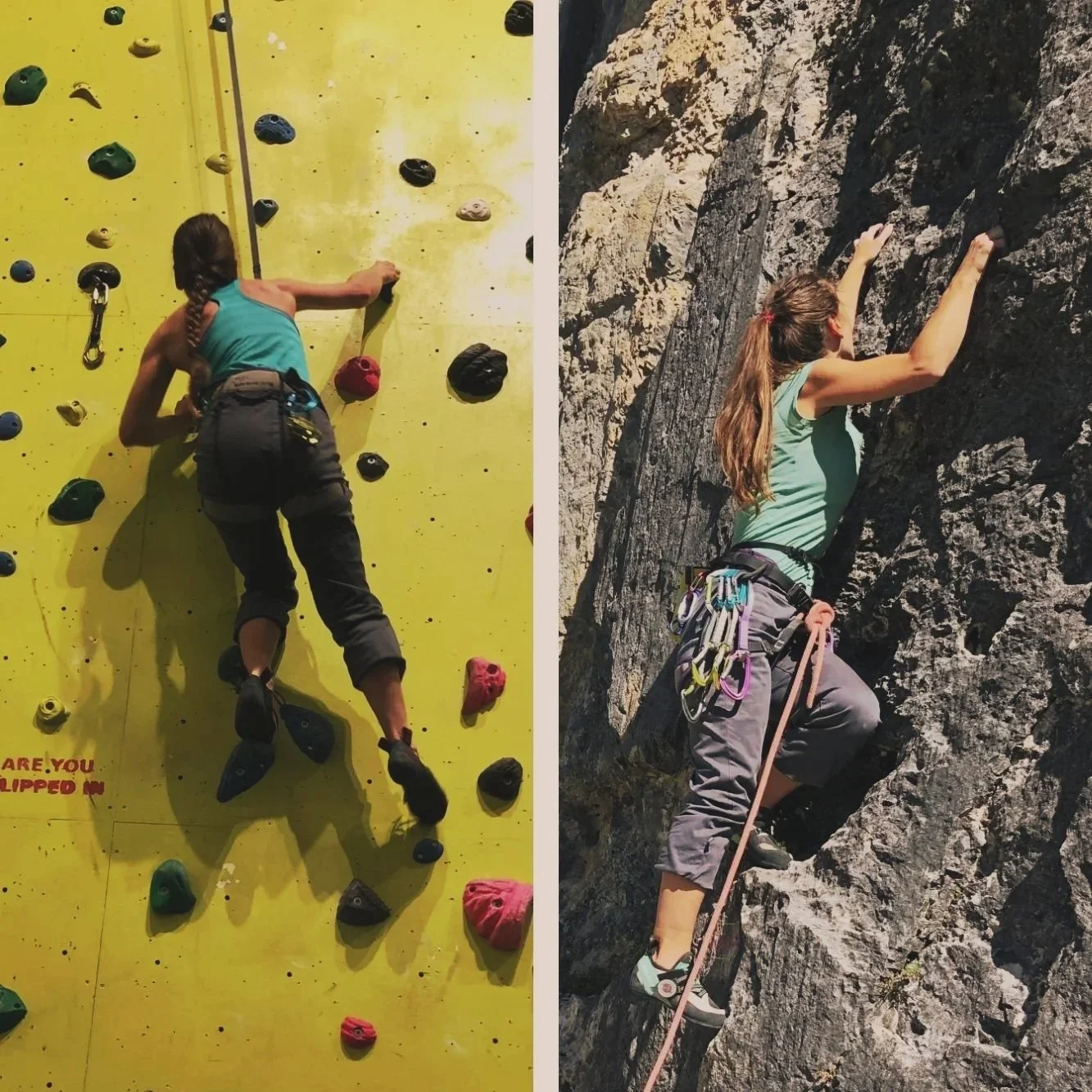
Indoor vs Outdoor Climbing
Disclaimer – Safety First!
Climbing is a potentially dangerous sport, both in the gym and outdoors. Before venturing onto real rock, ensure you have the proper technical knowledge and know how to use your equipment correctly.
If you are a beginner, rely on qualified professionals, such as certified guides or instructors, for proper and safe training.
The suggestions in this article are for informational purposes only and do not replace direct instruction or personal judgment in real-world situations.
What do you need for outdoor climbing? The Essential Checklist
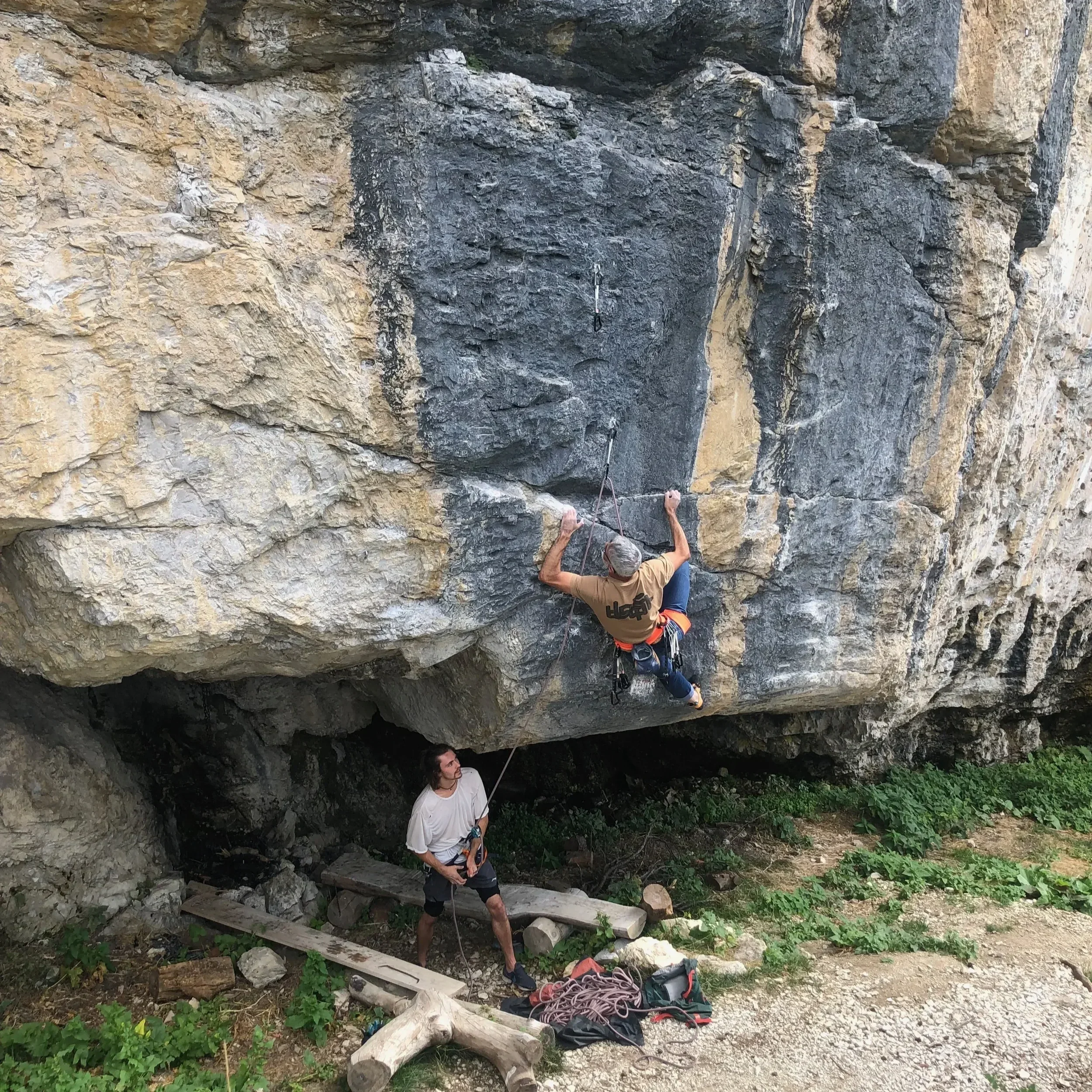
Naughty climbers caught climbing without a helmet!
For outdoor sport climbing, you need: a single rope (at least 60–70m), 12–14 quickdraws, a belay device (preferably assisted braking), a helmet, rock-specific climbing shoes, chalk, and a lanyard (PAS). Unlike in the gym, wearing a climbing helmet is essential, and the rope must be designed for outdoor use.
Let’s look at each element in detail.
1. Single Rope: How long does it really need to be?
One of the most frequent questions is: “Is my gym rope okay for outside?”
Short answer: It depends, but often it isn’t.
For outdoor climbing, you need a single rope of at least 60m—ideally 70m or even 80m if you visit modern crags. Why:
Many routes exceed 30m.
You need a margin for lowering/rappelling.
Some gyms use shorter ropes (40–50m).
Pro Tip: If you need to buy a new one, choose an outdoor climbing rope with:
High abrasion resistance.
Dry eco treatment (even partial).
Intermediate diameter (9.5–9.8 mm).
2. Quickdraws: How many do you actually need?
Another classic question:
“How many quickdraws for sport climbing?”
For most crags:
12 quickdraws = absolute minimum.
14 quickdraws = most versatile choice.
16–18 quickdraws = if you want peace of mind on long pitches.
It's better to have 2–3 extra quickdraws in your bag than to run short halfway up a route.
Useful Tips:
Choose robust carabiners, not ultralight.
Solid gate (not too stiff).
A mix of 12–18 cm dogbones to help reduce rope drag.
Share the load with your climbing partner!
3. Helmet: Is it really mandatory?
Technically, a climbing helmet isn't "legally mandatory."
In practice? You should always wear it.
At the crag, the most common risk isn't the climber falling, but:
Rocks dislodged by the climber above.
Natural debris.
Gear falling from the anchor.
Wear your helmet:
While belaying.
While climbing.
Especially at crowded crags.
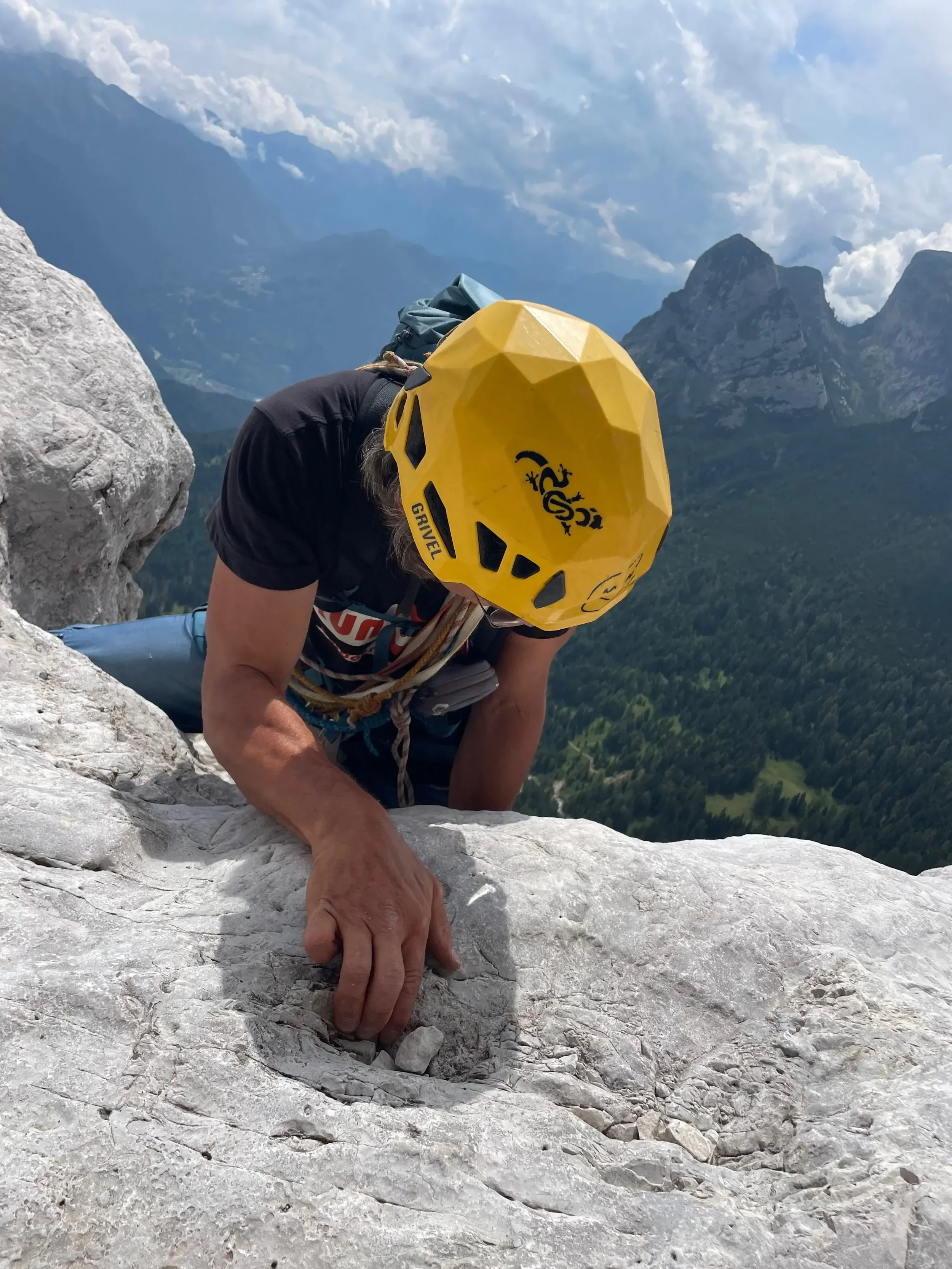
A climber with a good (and well-protected) head on his shoulders!
4. Belay Device
Just like in the gym, an assisted braking device (or semi-automatic) is strongly recommended at the crag. Not because you are "incapable," but because:
Falls can be longer.
Friction varies.
Fatigue is a factor. A good assisted belay device reduces errors in real-world situations.
5. Lanyard and Locking Carabiner
You might not use one in the gym, but at the crag, it's often essential. A lanyard (or Personal Anchor System) is fundamental for:
Cleaning the anchor (threading the rope).
Safety while retrieving the rope.
Unexpected situations.
Keep it simple, robust, and no-frills.
6. Climbing Shoes and Chalk
No need to overhaul everything here, but try to adapt.
Shoes:
Choose a model that is moderately stiff and comfortable enough to wear for longer periods.
Too soft = uncomfortable on long slabs.
Too aggressive = tiring on easy routes.
Chalk:
Less is more.
Avoid giant buckets; use a standard chalk bag.
Always brush the holds when you’re done.
What you can leave at home (or use differently)
Transitioning to rock doesn't mean bringing the whole gym to the crag. You can avoid:
Short indoor ropes.
Giant "bucket" chalk bags.
Massive 40L packs for a half-day session.
Overly technical accessories that aren't necessary for beginners.
The best outdoor climbing gear is: essential, reliable, and gear you know how to use.
Safety and Ethics: Respect the Rock
Outdoor climbing means entering real natural environments. Safety isn't just about you; it’s about:
The people climbing near you.
The people coming after you.
The environment itself.
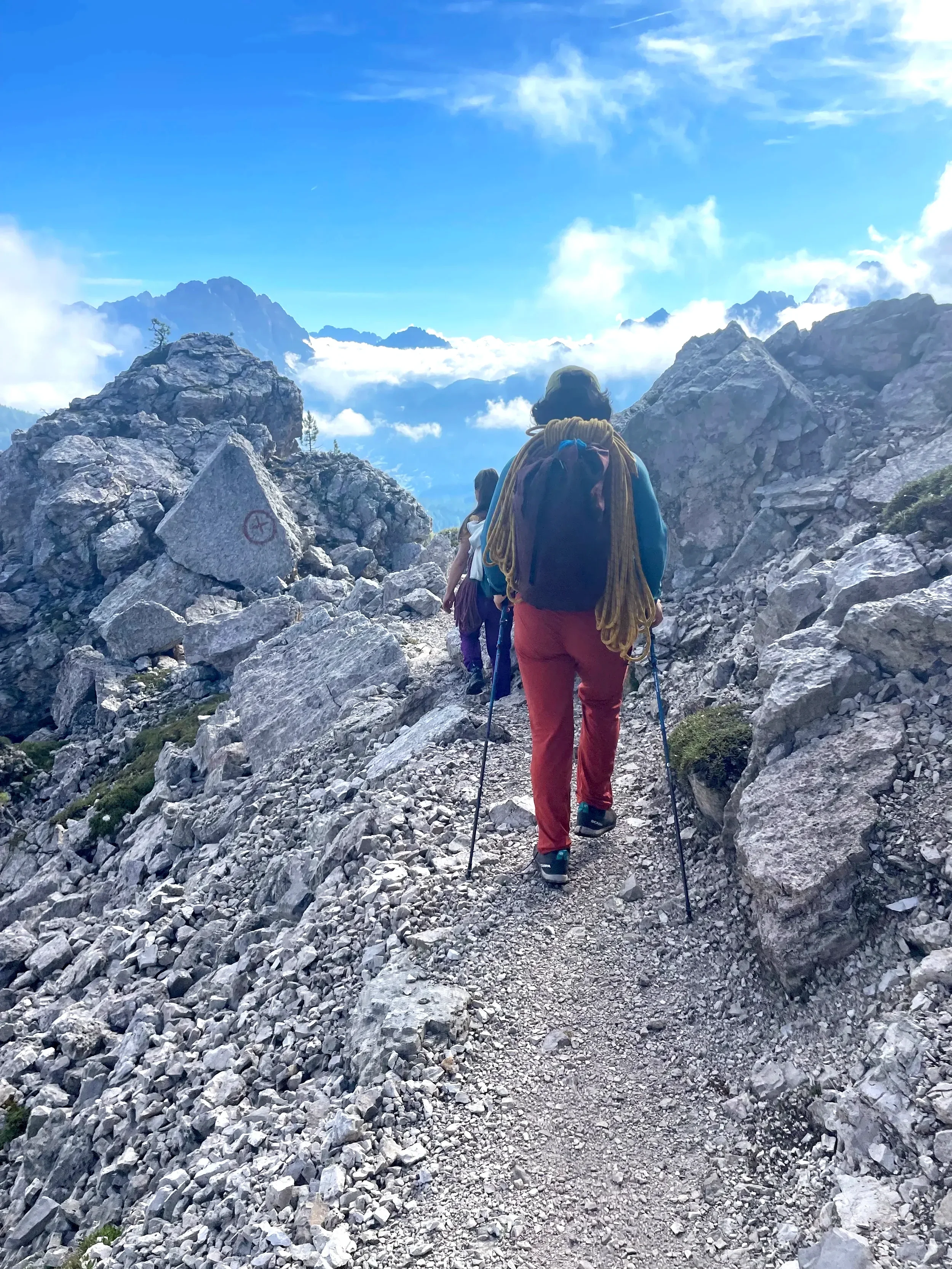
Respect nature: leave no trace!
Fundamental Best Practices (Leave No Trace):
Stay on marked trails.
Avoid unnecessary shouting.
Carry out all trash (even biodegradable items).
Avoid excessive brushing—but don't forget to do it!
Respect seasonal closures (bird nesting).
👉 Read this article on the "Leave No Trace" philosophy. This is an integral part of crag safety.
Your Outdoor Climbing Starter Kit
If you are making your first move from gym to rock, you don't need to buy everything at once, but you do need to start right.
At arrampica.shop (opening February 2026), you will find:
Single ropes selected for outdoor use.
Reliable and lightweight helmets.
Balanced quickdraw sets.
Belay devices perfect for the crag.
In short: Less confusion, more climbing
Outdoor climbing is a natural progression, but it must be done with respect and awareness. You don’t need to be an expert; you just need to be prepared.
Bring:
The right gear.
A level head.
A desire to learn.
An instructor if you lack experience.
The rock will do the rest.
