Built to Last: Why Durable Climbing Gear is the Best Investment
If you climb regularly, you already know: buying durable climbing gear isn't just about saving money. It’s a technical, ethical, and practical choice. Investing in gear that stands up to the rock, the training, and the passage of time means wasting less, avoiding impulsive purchases, and having more confidence in your gear when you're on the wall.
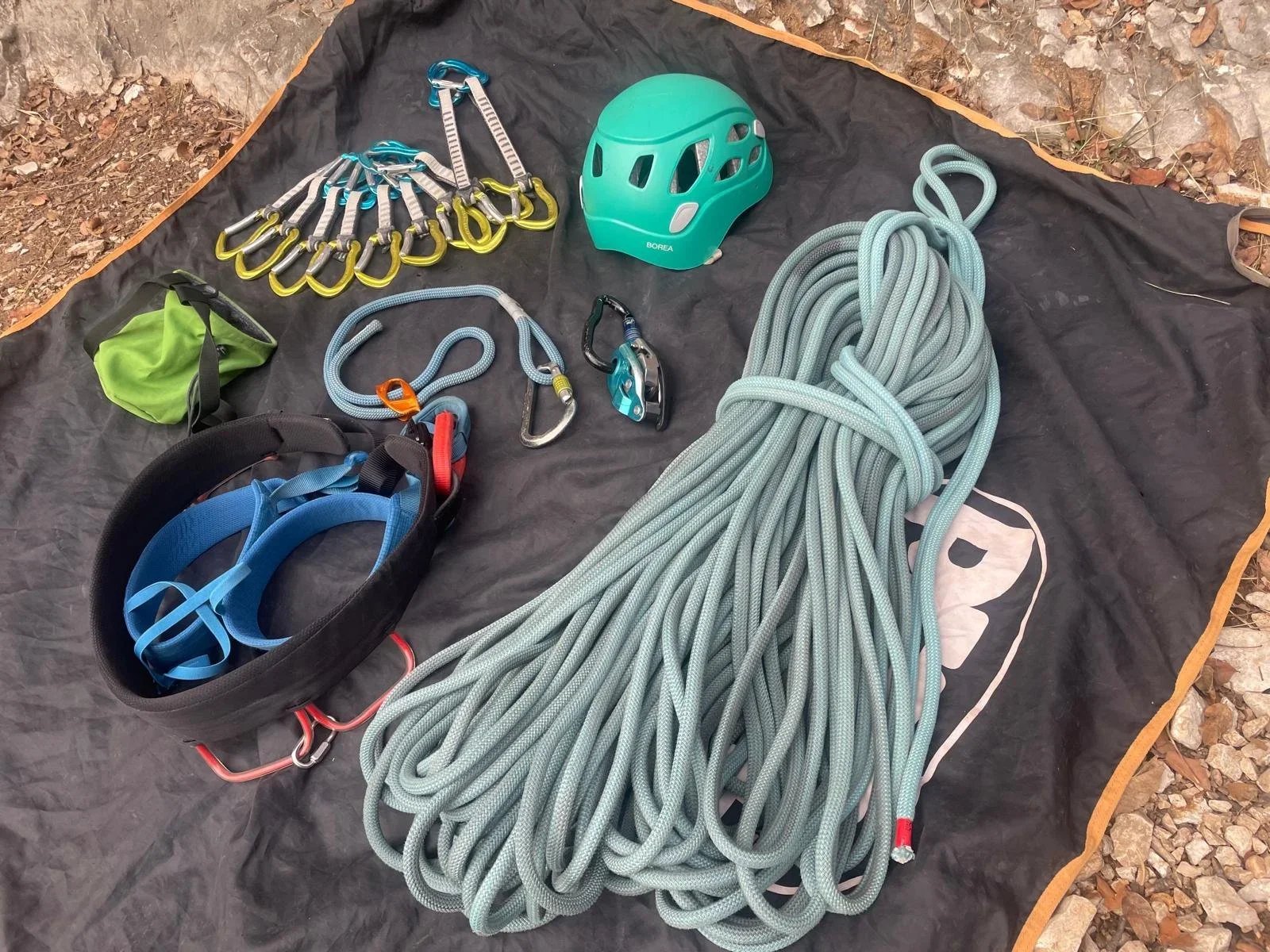
Sport climbing gear
In this Arrampica! guide, we’ll talk about how to recognize products that truly last, which materials and details matter, why a handmade chalk bag can be tougher than an industrial one, and how proper climbing gear maintenance makes all the difference in the long run.
How to recognise climbing products that last?
To choose long-lasting climbing equipment, focus on three pillars: high-quality materials (like ripstop nylon or high-weight recycled fabrics), reinforced stitching at stress points, and ease of repair. Eco-conscious brands and artisanal accessories offer higher abrasion resistance, reducing waste and costs over time.
Three key signs to check immediately:
Materials: High-density fibers, anti-abrasion treatments, certified fabrics.
Construction: Double stitching, reinforcements on knees, seat, and edges.
Repairability: Simple parts to mend or replace (cords, linings, elastics).
If a product "promises" a lot but hides thin materials or weak seams, it likely won't survive a season at a sharp limestone crag.
Chalk bags: Not just aesthetics, but durability
At first glance, it might seem insignificant, but a handmade chalk bag is one of the best examples of how build quality beats marketing. Here, the details matter more than the logo.
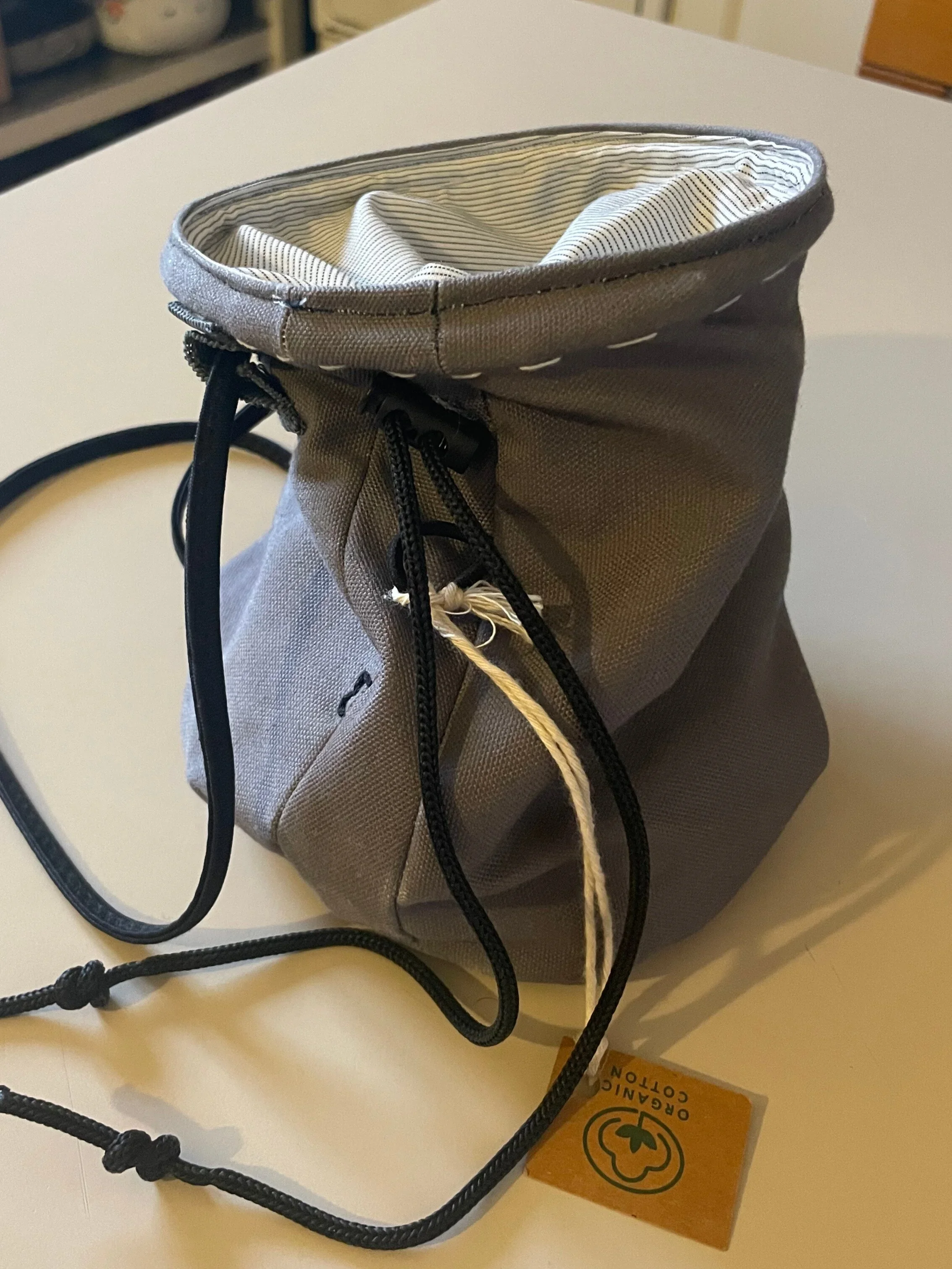
A handmade chalkbag made with durable materials
What makes a chalk bag truly durable?
Rugged Exterior: Thick canvas, Cordura, or high-density recycled fabrics.
Interior: Fleece or microfiber that doesn't "pill" or shed after a few months.
Closure: A simple, replaceable cord (better than rigid systems that eventually break).
Stitching: Reinforced at the top rim and attachment points.
A good bag resists impacts, sharp edges, and constant friction. If it's well-made, it can be repaired instead of thrown away, lasting for decades.
👉 Check out the Chalk Bag collection at arrampica.shop for examples of construction designed to last.
Clothing and Accessories: Fabrics that love the rock
When it comes to sustainable climbing apparel, the right question isn't just "is it green?" but "how well does it resist real-world use?" and "what materials were used?"
Natural vs. Synthetic Fibers (Without the Dogma)
Cotton: Comfort and breathability, but low abrasion resistance.
Hemp: Excellent against abrasion; a very ecological choice as it grows with fewer chemical inputs.
Recycled Synthetics: Regenerated nylon and elastane offer superior stretch and durability.
The best solution is often a smart mix: natural for comfort, synthetic for mechanical strength.
Construction details that make the difference:
Reinforcements on knees and back.
Pockets stitched away from harness friction points.
Thick threads and flatlock seams.
Brands like Patagonia prove that durability and sustainability can coexist, especially when an active repair program is in place.
👉 Discover our Clothing selection at arrampica.shop: a few curated pieces, chosen to truly endure.
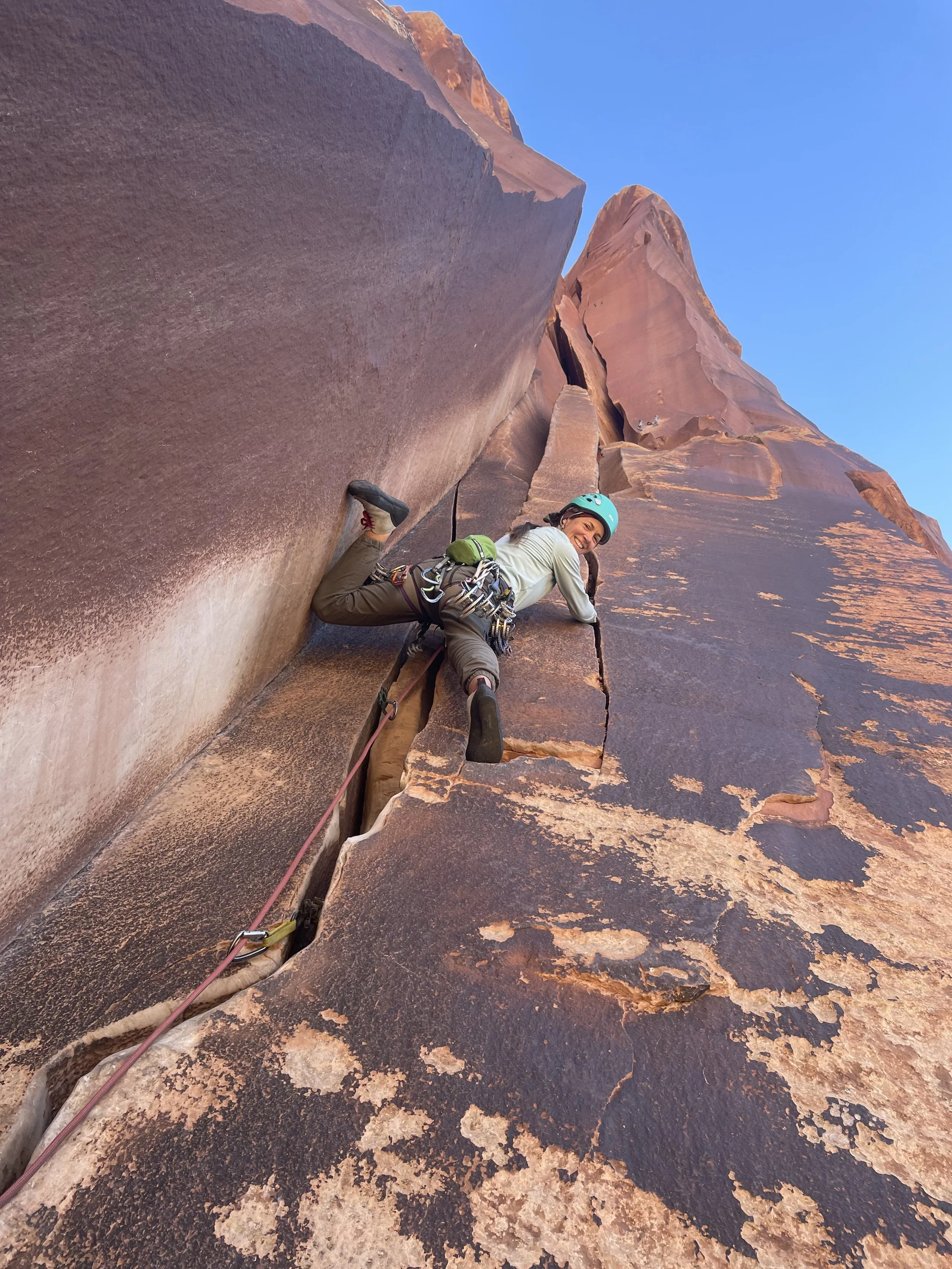
Climbing in Indian Creek, Utah, USA
Rugged materials for climbing: What to look for on the label
Not all labels are created equal. A few keywords help distinguish pure marketing from real substance:
Ripstop: A cross-hatch weave that stops small tears from spreading.
High GSM (Grams per Square Meter): More weight usually means more resistance (within sensible limits).
Certifications: Look for Bluesign® and Fair Wear Foundation. These indicate controlled, high-quality processes.
A certified material doesn't guarantee indestructibility, but it significantly reduces the risk of "disposable" products.
Maintenance: The secret to making your gear live longer
Even the best climbing equipment will fail without proper care.
Simple rules (that actually work):
Wash less, wash better: Cold water, mild detergents, no fabric softener.
Air dry: Heat destroys fibers and elasticity.
Repair immediately: A tiny snag today is a hole tomorrow.
Programs like Patagonia's Worn Wear demonstrate that repairing is an integral part of sustainability.
Why spending more today pays off tomorrow
Buying high-quality climbing accessories isn't elitism: it's math. A product that lasts twice as long costs less over time, reduces waste, and stays with you longer on your days at the crag or in the mountains.
In summary:
Fewer impulsive purchases.
Greater reliability.
Reduced environmental impact.
This is the Arrampica! philosophy: Buy less, choose better, climb longer.
Conclusion: A conscious choice is an act of sustainability
True sustainability isn't about changing gear every season; it’s about choosing durable climbing gear and taking care of it. Whether it's a handmade chalk bag or reinforced pants, every choice counts.
👉 Explore arrampica.shop and discover products designed for longevity, not for fashion trends.
